👥 Join our private Slack community
Claim invite →

1. Modern professionals do not just need more productivity tools. They need support cutting through the noise so they can focus on the work that actually matters.
2. The future of AI assistants depends on trust. Users need to understand what the system can do, what it cannot do yet, and when human judgment is still needed.
3. The best AI products will meet users where they already are, whether that is on the web, mobile, SMS, email, or whatever interface they naturally use throughout the day.
4. For entrepreneurs getting started in AI, the best advice is simple: screw it, just do it. Build, test, learn, and adapt as the space changes.
5. When building a team, intelligence matters, but curiosity and agency are what turn raw ability into real progress.
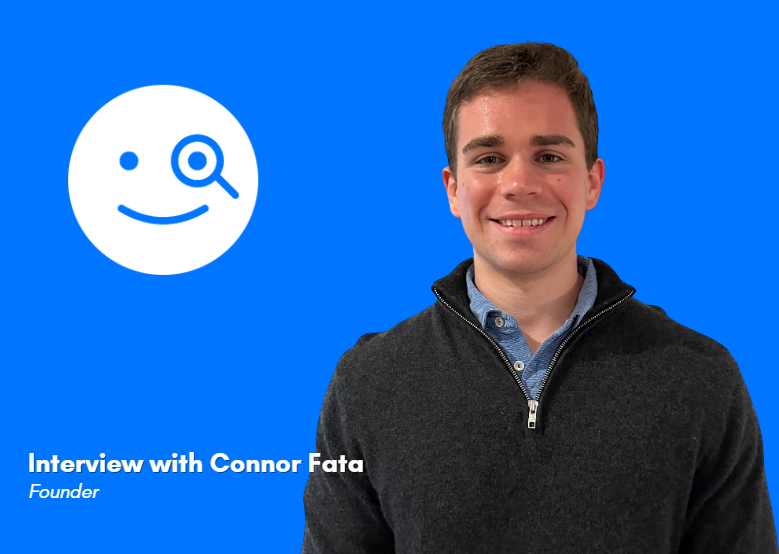
Connor Fata is the Founder of alfred_, an AI personal assistant built to help busy professionals manage the administrative layer of modern work.
alfred_ connects to the tools people already use, including email, calendar, and tasks, then helps surface what matters, reduce distractions, and turn incoming information into action. Instead of forcing users to constantly check different apps to make sure nothing slipped, alfred_ monitors the noise, organizes what needs attention, and helps people stay focused on the work that actually matters.
The vision is simple: give everyone the kind of support that used to be reserved for executives.
Meet Connor Fata, Founder of alfred_.
Who would Batman be without Alfred?
That question was the starting point for Connor Fata’s creation of alfred_. Not because everyone needs a butler, but because everyone needs support. The modern professional spends an enormous amount of time managing the work around the work: checking email, moving things between tools, updating tasks, watching the calendar, remembering what needs attention, and trying not to let something important slip.
As Connor got older and started building, he noticed how much of his day was being consumed by small administrative decisions. He would make lists, set priorities, and plan his day, only to have meetings, emails, notifications, and unexpected requests pull him in different directions. The problem was not a lack of ambition or organization. The problem was that he was spending too much time acting as his own secretary.
alfred_ was created to change that.
The product is an AI personal assistant designed to help people manage the administrative layer of modern work. It connects to the tools people already use, like email, calendar, and tasks, then helps surface what matters, hide what does not, and turn incoming information into action. Instead of constantly checking your inbox to make sure you did not miss something important, alfred_ monitors the noise and brings the important things to you.
The bigger vision is simple: give every person the kind of support that used to be reserved for executives. Not another dashboard. Not another productivity app. A personal assistant that helps you protect your attention, stay on top of what matters, and get back to doing the work only you can do.
The team at alfred_ is still quite small, with only three people working hard on making sure it’s the best it can be. And Connor believes that’s actually a great thing, because it lets them focus on the mission and keeps everyone focused on the most important things.
The current team is remote but that’s not the end goal. Connor would actually like to get everyone together in New York, where the company is based. But he acknowledges that’s difficult to do because it’s so expensive in New York.
Because alfred_ is still early and the team is small, Connor is focused on the work that matters most: improving the product, listening closely to users, fixing the gaps, and building the features that make the assistant more useful in real daily workflows.
But one of the biggest opportunities is education. Not education in the traditional sense, but helping users understand how to work with an AI personal assistant. With a product like alfred_, trust is just as important as functionality. Users need to understand what the assistant can do, what it cannot do yet, when it is acting in the background, and when it still needs human judgment.
That education goes both ways. The company is not only teaching customers how to use alfred_; it is also learning from how customers actually work. Every email workflow, calendar habit, task system, and communication style helps shape the product. The goal is to make alfred_ more personalized over time, so it can support each user without feeling intrusive or disruptive.
For Connor, the challenge is finding the right balance between proactivity and control. A great assistant should notice what matters, reduce the noise, and help users take action faster. But it should also be transparent, predictable, and easy to override. That balance is central to how alfred_ grows: build trust first, then expand what the assistant can reliably handle.
At alfred_, the customer experience philosophy starts with a simple idea: meet users where they already are.
Connor believes the best assistant should not force people into one interface or one workflow. People move between their laptop, phone, inbox, calendar, and messages all day. alfred_ is designed to fit into that reality instead of asking users to change how they work. That is why the product is available through the web app, mobile app, and SMS, giving users a way to interact with their assistant wherever they are.
For Connor, this is especially important because the goal is not just to build software people open once a day. The goal is to build a personal assistant that can support people in the flow of their actual lives. Sometimes that means checking the app. Sometimes it means getting an SMS when something important comes in. Sometimes it means sending a quick instruction while walking between meetings.
That philosophy will continue to shape how alfred_ expands. Connor wants the assistant to become more device agnostic, platform agnostic, and browser agnostic over time. Whether someone wants to use alfred_ through a dashboard, text message, email, or another channel entirely, the product should be able to meet them there.
The bigger customer experience vision is to make alfred_ feel less like another tool to manage and more like a reliable layer of support that is always accessible when the user needs it.
For Connor, innovation at alfred_ is not about adding features for the sake of adding features. The company’s North Star is much simpler: give users more time back in their day.
That means alfred_ has to keep adapting around the real administrative work people already deal with. Email, calendar, tasks, reminders, notes, invoices, scheduling, and daily coordination all create small moments of friction. Individually, they may not seem like much. But together, they take up a meaningful amount of time and mental energy.
The long-term goal is for alfred_ to remove more of that burden without making the user feel like they have lost control. A great assistant should be proactive enough to notice what matters, but careful enough to know when something needs review, approval, or human judgment.
That is why Connor thinks about innovation through the lens of reliability, trust, and time saved. New capabilities only matter if they help users avoid repetitive work, reduce stress, or make faster decisions. Whether that means better weekly summaries, cleaner task extraction, smarter inbox monitoring, or eventually support for more complex workflows, the purpose is always the same: let users spend less time preparing, searching, checking, and organizing, and more time actually moving forward.
But Connor is also careful about how those capabilities are introduced. With AI, it is easy to imagine big possibilities. The harder part is making sure they work consistently in real life. Every new workflow requires testing, iteration, and a clear understanding of where the assistant should act on its own versus where it should ask the user first.
For alfred_, adaptability means growing with users while staying grounded in trust. The product will continue to expand, but only in ways that make the assistant more useful, more reliable, and more aligned with the way people actually work.
For Connor, the best advice for anyone getting started in AI is simple: screw it, just do it.
AI is moving too quickly for anyone to wait until they have the perfect idea, perfect timing, or perfect plan. The people who learn the fastest are the people who get in the arena, build something, test it, break it, talk to users, ask questions, and keep going.
That does not mean the process is easy. Building in AI comes with uncertainty, technical challenges, and constant change. But Connor sees that as part of the opportunity. Even if something does not work out exactly the way you imagined, you still come away with experience, lessons, and probably a good story. To him, that is far better than sitting on the sidelines and wondering what might have happened.
His approach is to stay curious and surround himself with people who are smarter than him. He believes one of the best positions you can put yourself in is being the “dumbest person in the room,” as long as you are willing to ask questions, listen carefully, and absorb as much as you can.
For new entrepreneurs, Connor’s message is not to overthink the first step. Find a problem that matters, start building, talk to users, and keep improving. In a field changing as quickly as AI, momentum matters. The important thing is to try, learn, and stay close enough to the work that you can adapt as the world changes.
What's the 1 tool you couldn't live without? Claude Code
Most important quality you look for in new hires? Intelligence, curiosity, and agency. If they’re not intelligent it’s really tough to ever train them to get to where they need to be, but intelligence is kind of a starting point. But agency and curiosity are essential as well so they can grow.
Last book/podcast that you found interesting? Founders podcast. Books would be Alexander Hamilton, The Hypomanic Edge, and Why Greatness Cannot Be Planned.


We're elevating customer experiences at 500 top E-Commerce brands (and counting). Let's see what we can do for you!
Learn MoreBook a call with one of our specialists today to see how TalentPop can assist you with putting together a solution for your customer service needs.
Learn More
.png)


